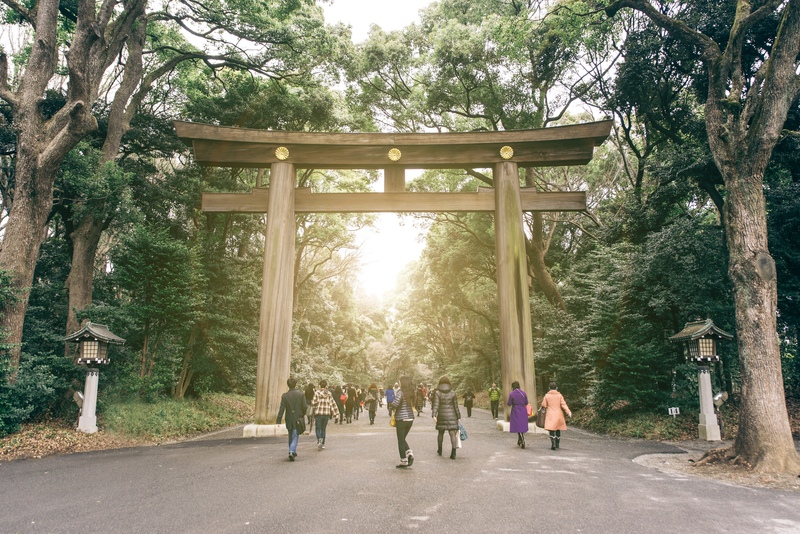
Feeling Nervous About Visiting a Shrine?
I once spoke with a traveler who told me, “I really want to visit a shrine… but I’m afraid I’ll do something wrong.”
Maybe you feel the same.
When you imagine a Japanese shrine, you might picture a quiet place surrounded by trees, with people bowing and performing rituals you don’t fully understand. It can feel a little intimidating—like there are invisible rules everyone else knows but you don’t.
What if you stand in the wrong place?
What if you skip an important step?
What if you accidentally do something disrespectful?
These thoughts are completely normal.
The truth is, many first-time visitors feel this way. Japanese culture can seem subtle and unspoken, especially in places that feel sacred.
But here’s something important I want you to know:
You don’t need to be perfect.
You just need to be respectful—and a little curious.
That’s more than enough.
A Peaceful and Meaningful Experience Awaits
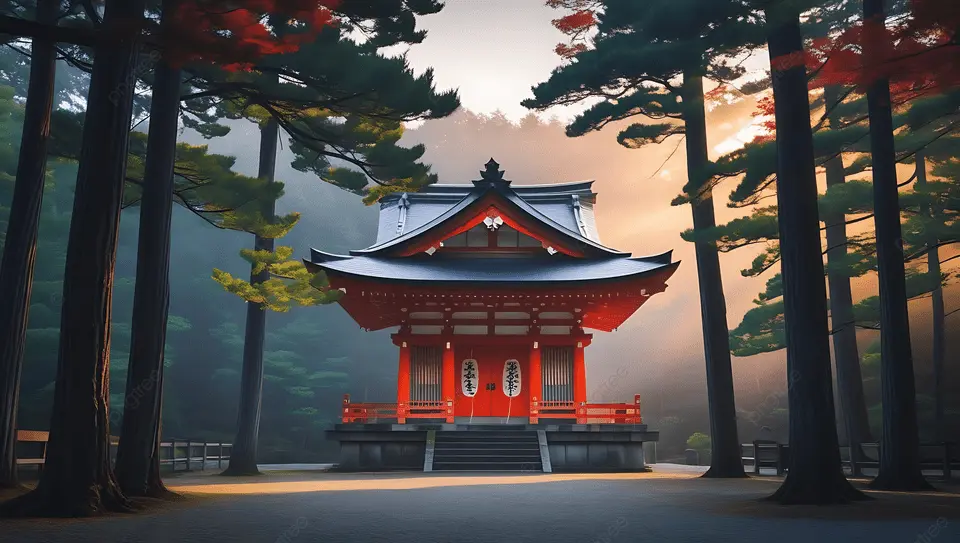
Now, let me show you what’s waiting for you on the other side of that uncertainty.
Imagine stepping away from the busy streets of Tokyo or Kyoto. The sounds of traffic fade, replaced by the soft crunch of gravel under your feet. Tall trees surround you, and the air feels cooler, calmer.
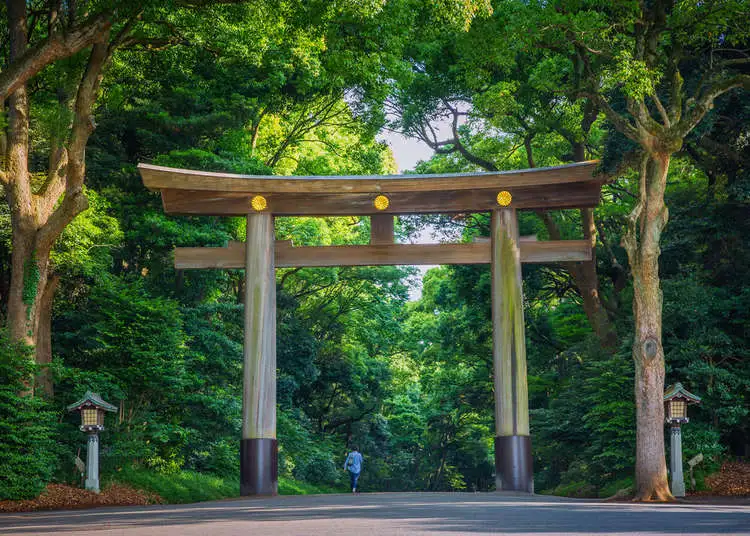
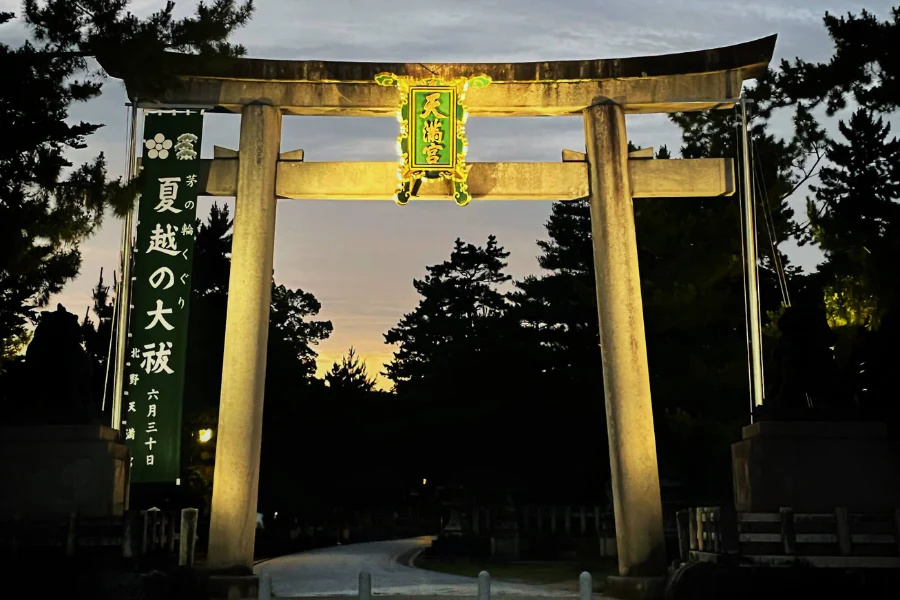
Ahead of you stands a simple wooden gate—the torii. As you walk toward it, something shifts. It’s subtle, but you can feel it. Like you’re entering a different kind of space.
Inside, time slows down.
You might hear the wind moving through the leaves, or the quiet rhythm of footsteps around you. People speak softly. Some pause, close their eyes, and bring their hands together in prayer.
It’s not just sightseeing.
It’s a moment to breathe.
Many travelers tell me that visiting a shrine becomes one of the most memorable parts of their trip—not because they followed every rule perfectly, but because of how it made them feel.
Calm. Present. Connected.
Why It Feels Confusing at First
If shrines are so peaceful, why do they feel so difficult at first?
The answer is simple: many of the “rules” are not clearly explained.
In Japan, a lot of behavior is learned by watching others, not by reading signs. At shrines, this can be especially true. The actions—bowing, washing hands, clapping—have meaning, but they’re rarely explained in detail, especially in English.
On top of that, shrines are a blend of spirituality and tradition. Even many Japanese people don’t think of the steps as strict religious rules—they’re more like customs passed down over time.
But as a visitor, it can feel like you’re expected to know everything.
That gap—between what you see and what you understand—is where the anxiety comes from.
The good news?
You don’t need to memorize everything to have a meaningful experience.
A Simple Way to Feel Confident
Instead of trying to learn every detail, I recommend focusing on just three simple ideas.
First, be respectful.
Second, observe others.
Third, move calmly.
That’s it.
If you keep these in mind, you’ll naturally fit into the atmosphere of the shrine.
You might not perform every step perfectly—and that’s okay. Shrines are not places that judge you. They are places that welcome quiet intention.
Think of it this way: it’s not about getting it “right.”
It’s about being present.
A Gentle Step-by-Step Guide
Let’s walk through a typical visit together, so you know what to expect.
Entering Through the Torii Gate
As you approach the shrine, you’ll see a torii gate. Before passing through, pause for a moment and give a small bow. It doesn’t have to be deep—just a simple gesture of respect.
When you walk through, try to stay slightly to the side rather than the center. The middle path is traditionally considered the space for the deity.
Already, you’ve begun your visit beautifully.
Cleansing at the Water Pavilion
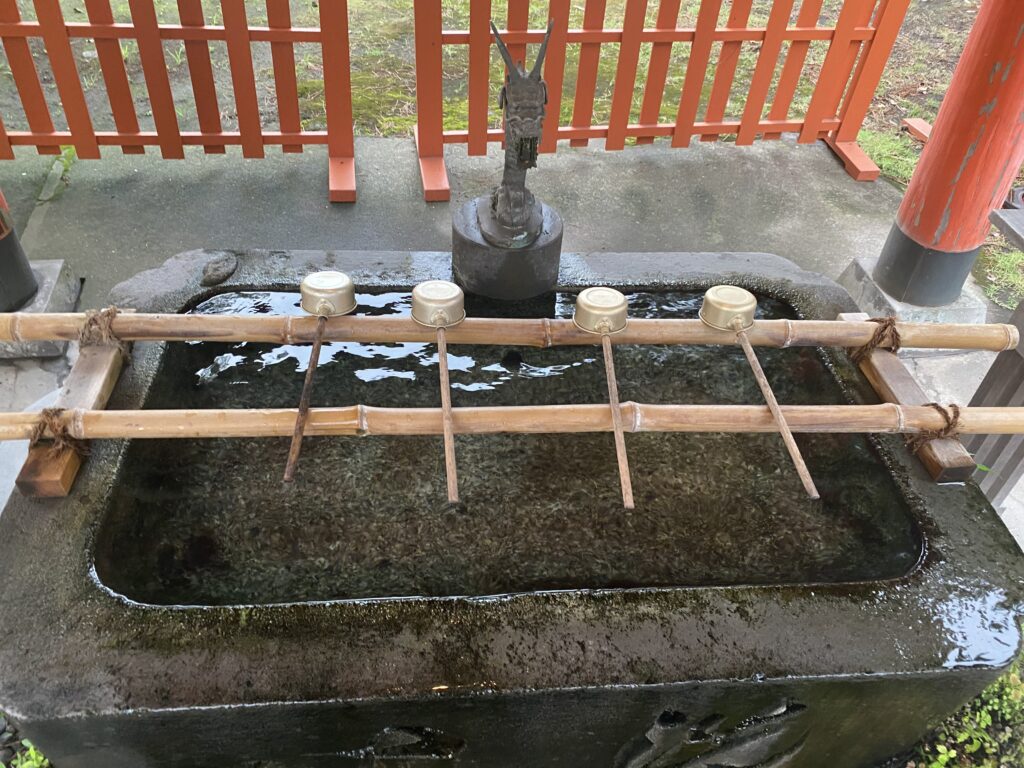
A little further inside, you’ll likely find a small water pavilion with ladles. This is where visitors symbolically purify themselves.
Take a ladle and pour water over your left hand, then your right. If you feel comfortable, you can rinse your mouth lightly (without swallowing the water), but it’s perfectly fine if you skip this part.
There’s no need to worry about doing it perfectly. The meaning is simple: preparing yourself, both physically and mentally.
Offering a Prayer
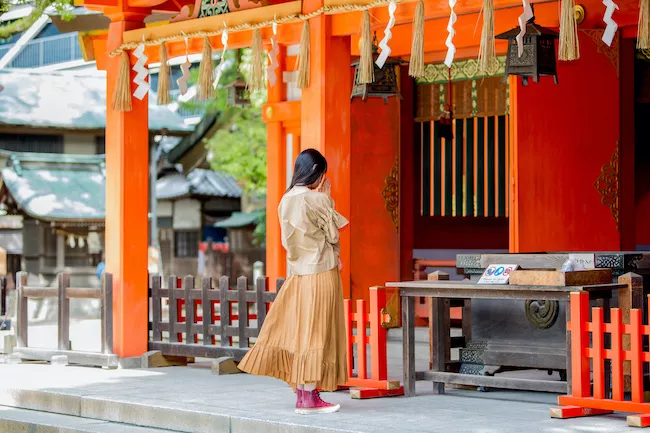
When you reach the main hall, you may notice people tossing a coin into a box, then bowing and clapping.
A common sequence is: bow twice, clap twice, pray silently, then bow once more.
You can follow this if you like. Or you can simply stand quietly, close your eyes, and make a wish or reflect for a moment.
There is no single “correct” way that you must follow. What matters is your sincerity.
What to Keep in Mind
While you’re there, just remember a few gentle guidelines.
Keep your voice low.
Walk rather than run.
Be mindful of signs about photography.
If you’re unsure about something, simply look around and follow the flow of others.
You’ll find your rhythm naturally.
6. Small Experiences That Make It Special
If you’d like to explore a little more, there are a few simple ways to deepen your visit.
You might try drawing an omikuji, a small paper fortune. Or write a wish on a wooden plaque called an ema and hang it alongside others.
Some travelers also collect goshuin—beautiful stamps and calligraphy unique to each shrine. It becomes a meaningful record of your journey.
These are not just souvenirs. They are quiet moments you take with you.
7. You’re Ready
By now, I hope that what once felt uncertain now feels a little clearer—and a lot more inviting.
You don’t need to remember every step.
You don’t need to worry about small mistakes.
Just step through the gate, take a breath, and let yourself experience the moment.
Japan doesn’t expect perfection from you.
It welcomes you as you are.
And somewhere between the sound of your footsteps and the stillness of the trees, you may find something you didn’t expect—a sense of calm that stays with you long after you leave.
That’s the real beauty of visiting a shrine.
And it’s waiting for you.


comment